
Music video
My music video uses forms and conventions of real music videos, for example how I used a studio to shoot some of the video. Because of the indie rock genre of the song, I thought it was appropriate to highlight the traditional band aspect of the artist and have part of the music video shot in a studio using instruments and a mic. This is found in many music videos by indie rock bands as the instruments are a big part of their identity. I took inspiration from bands such as Catfish and the Bottlemen and the video for their song “Twice”, as well as Sundara Karma and the video for their song “Loveblood”. Both of these videos have parts filmed in a studio with just the band and instruments, and it’s really suitable for the genre and portrays them correctly as indie rock bands. Whereas a lot of pop artists are an individual, rock bands are a collection of people and so showing them in the studio seemed appropriate. I wanted the audience to feel as if they were watching the band perform live, as live performances are a massive part of what they do.
Furthermore, in the video I tried to present the band as a proper indie rock band. Our lead singer wore dark indie clothing, typical of indie rock band frontmen such as Alex Turner of the Arctic Monkey’s and Van McCann of Catfish and the Bottlemen. Clothing is a big part of how the band is portrayed to the public as I found out in my research of branding and so it was important for our band to conform to the style of clothes typical of the genre. This will make the band appeal to the intended audience, as they will be able to relate to the band members. Our lead singer also had facial hair, typical of someone in a rock band such as Liam Fray from the Courteeners.
Another way that I used forms and conventions of a real music video was in my editing. During the latter stages of the song, it starts to speed up, so I adapted my editing and increased the speed of shots so that it matched. From my research I found that the pace of editing often matched the pace of the song, something often found in indie rock videos. I didn’t want the narrative to get left behind by the song, as it wouldn’t look right and wouldn’t fit the conventions of a real music video. This supports Carol Vernallis’s theory about editing.
One of the main ways I used forms and conventions of real music videos was by linking the lyrics of the song with the narrative of my video. Andrew Goodwin stated that in music videos, the visuals should illustrate the lyrics of the song. We have followed this theory, as our visuals relate exactly to the lyrics of the song. The lyrics tell a story of a woman whose current life is very boring and mundane when compared to the life she lived when she was younger. It describes how she often reminisces of her youth and wishes she could go back. I decided to illustrate this by having a woman coming home from work, and then getting ready to go on a night out. The visuals show her remembering she is going out, and then her routine including ironing her shirt and putting on make up. I also included small clips of a party to show her reminiscing of her past. The visuals told the story of the lyrics and is an example of how I’ve used conventions of a music video.


DIGIPAK & POSTER
For the font of the text on my digipak and poster, I followed conventions by using a font that was appropriate for the genre, indie rock. The font is called “Queen of clubs”, which I found on the internet. I thought it would suit my digipak and poster because of how simple it was. The simplicity of it contrasted well with the everything that was going on on the poster and front cover. The simple design is also suitable for the indie rock genre, as simple fonts are often used by bands. Although it wasn’t a complicated font, it was quite bold and still managed to stand out. I took inspiration from the band Foals, who use a very simple font on their albums “Holy fire”, “Total life forever” and “What went down”. The simplicity of it still manages to give it a big impact, something I was going for. The band Kasabian also use a very uncomplicated font on their album covers, for example on their album “For crying out loud”. These two bands were big influences on how I styled my front cover.
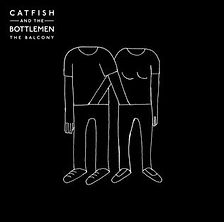
I decided to make my digipak and poster black and white as this is massively associated with the indie rock genre. When doing my research, I found that a lot of indie rock bands used black and white as their colour schemes, and so I thought I would use the black and white theme for my digipak and digipak poster. Indie rock band Catfish and the Bottlemen are massively associated with black and white, and both their album covers are those colours, as well as many images of the band. I also took inspiration from Arctic Monkey’s cover for their first album “Whatever people say I am that’s what I’m not”, and Kasabian’s self titled album cover. Furthermore, The 1975’s aesthetic for their first album was black and white. This included their album cover, digipak, posters, live performances and music videos. Their band was associated with black and white for years, and I wanted to try and get this vibe for my band. This is a prime example of how I used conventions of real media products.




.
You used to get it in your fishnets
Now you only get it in your night dress
Discarded all the naughty nights for niceness
Landed in a very common crisis
Everything's in order in a black hole
Nothing seems as pretty as the past though
That Bloody Mary's lacking a Tabasco
Remember when he used to be a rascal?
Oh, that boy's a slag
The best you ever had
The best you ever had
Is just a memory and those dreams
Not as daft as they seem
Not as daft as they seem
My love, when you dream them up
Flicking through a little book of sex tips
Remember when the boys were all electric?
Now, when she tells she's gonna get it
I'm guessing that she'd rather just forget it
Clinging to not getting sentimental
Said, she wasn't going, but she went, still
Likes her gentlemen to not be gentle
Was it a mega-dobber or a betting pencil?
Oh, that boy's a slag
The best you ever had
The best you ever had
Is just a memory, and those dreams
Weren't as daft as they seem
Not as daft as they seem
My love, when you dream them up
Oh, where did you go?
Where did you go?
Where did you go? Whoa
You're falling about
You took a left off Last Laugh Lane
You just sounded it out
You're not coming back again
You're falling about
You took a left off Last Laugh Lane
You just sounded it out
You're not coming back again
You used to get it in your fishnets
Now you only get it in your night dress
Started all the naughty nights with niceness
Landed in a very common crisis
Everything's in order in a black hole
Everything was pretty in the past though
That Bloody Mary's lacking in Tabasco
Remember when he used to be a rascal?
Cross cutting between the narrative and performance throughout my video is an example of how I've used conventions of real music videos. Throughout my video I switched between footage of my band performing and footage of my narrative. This is a very common feature of music videos of all genres and something I knew I needed to have in my video. I tried to find the right balance between narrative and performance. I arranged it so that I included enough narrative to tell the story of the lyrics, but at the same time including enough performance as this is a big convention of the genre. At times in the video I included a series of either just performance or narrative so that it made sense and the narrative didn't look too broken up. I am happy with how it turned out.
In addition, I used conventions of music videos by following Levi- Strauss' theory of binary opposites. My video explores the binary of opposites of old vs young. The main characters of my video currently lives a middle aged lifestyle of a house wife doing chores and working a 9-5 job. This is a stark contrast to the lifestyle of a younger person that she desperately wants to experience again. Whilst living her current life she constantly dreams about her youth and her younger, happier days. I show her current lifestyle through her coming home from work looking tired and weary. Her old lifestyle is shown in the short clips I found on YouTube and the dress and make up. This binary opposite theory is common in music videos and I used it in my video.